Colorado activists head to Minnesota to protest the Line 3 pipeline, while one Boulder resident sits on the board that can stop it
The week of Joe Biden’s inauguration began with the news that he planned to rescind approval for the controversial Keystone XL pipeline on his first day in office, as part of his commitment to address climate change. For more than a decade, environmentalists and indigenous groups have fought the project, intended to carry 830,000 barrels of oil a day from the tar sand oil fields of Alberta, Canada, through Montana, South Dakota and Nebraska, making its way to Gulf Coast refineries.
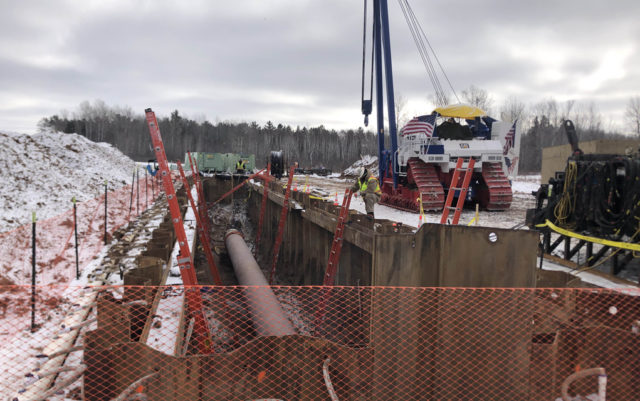
A few states east, in Northern Minnesota, environmentalists, including some from Boulder County, are joining local indigenous groups committed to halting another tar sands pipeline: Enbridge’s Line 3. Calling themselves “water protectors” like the thousands that gathered in North Dakota in 2016 to stop the Dakota Access Pipeline (DAPL), at times as many as 150 protesters gather in opposition to the Line 3 project, which received final approval and began construction in December 2020.
“I think that every rational person knows what we have to do to deal with climate change, that we need to decarbonize, we need to stop burning fossil fuels,” says Michael Denslow from Boulder. Denslow, along with a few others from Colorado, was in Minnesota over the weekend at protest camps along the pipeline route. He also recently signed an open letter to Enbridge Board Director Teresa Madden, asking the fellow Boulderite to “be a voice against Line 3 inside the Enbridge Corporation.”
In addition to the existential threat posed by climate change, those opposing Line 3 argue the project violates indigenous sovereignty and treaty rights and is causing wetland and ecological destruction, including wild rice beds used by local indigenous groups. They also raise public health concerns revolving around the coronavirus pandemic and the link between workman’s camps and missing and murdered indigenous women, as well as the probability of oil spills.
Read more here.
 Angela K. Evans