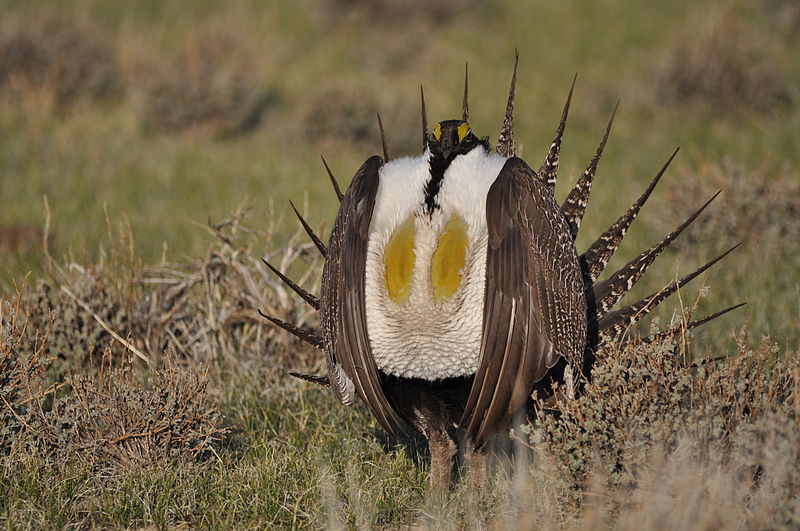
Photo by Jeannie Stafford/USFWS
The sage-grouse debate isn’t just about a bird, it’s about saving the West as we know it
Sandra Goodwin, a private landowner from Boulder, Wyoming, has personally seen the effects of oil and gas development on greater sage-grouse populations near her home. When a gravel mine began hauling an average of 350 semi-truck loads a day on the county road in front of her house, she stopped seeing the birds on her property. “It was after the mating season, and what it did was, we didn’t see a single nesting grouse that whole three months … all the birds just left. There were no hens; there were no babies,” she says. The gravel was destined for nearby oil and gas extraction sites to feed the construction of roads and well pads. And the trucks passed by other sage-grouse nesting and mating sites in addition to Goodwin’s.
While oil and gas development remains the primary threat to the greater sage-grouse and its sagebrush habitat in Colorado and Wyoming, the U.S. Fish and Wildlife Service (USFWS) has until Sept. 30 to decide whether or not to list the bird under the Endangered Species Act (ESA). At the same time, federal agencies, local governments and environmental activists disagree about the level of conservation and development restrictions needed to protect the bird and restore population levels.
Continue reading here.
 Angela K. Evans